Our Pages

Thursday, May 10

Yummy Esters


      An ester is an organic compound made by replacing the hydrogen of an acid by an alkyl or other organic group. For our studies, it is formed through the combination of a carboxylic acid and an alcohol. The hydroxyl groups combine to form water and our ester. The ester has a double bonded oxygen as well as a single bonded one to the same carbon. It has the ending
–anoate. The ‘parent’ chain is where the oxygen atoms want to give a hug.

To name an ester:

The hydrocarbon chain directly attached to the carbon side of the COO group has the ending –anoate. Then normally name the 'side' chain. 

Esterification is the reaction of a carboxylic acid and an alcohol to form water and an ester. In order for them to be formed, we need an inorganic acid. After some magical chemical reactions, we are left with the pleasant smell of the ester. A few smells are:
Ethyl methanoate: rum *yum*
Methyl butanoate: pineapples
Pentyl ethanoate: banana

Now it’s time to draw. Draw:

Butyl methanoate
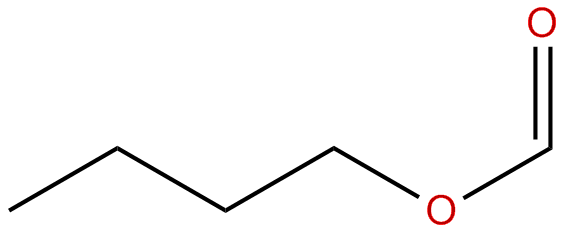


 Ethyl propanoate:
 

Esterification: Label the diagrams and determine a relationship between the reactants and products.


The reactants are methanol and butanoic acid.
The products are water and methyl butanoate.

The relationship: butanoate = butanoic acid / methanol = methyl.
In this way, the alcohol forms the ‘side chain’ and the carboxylic acid forms the parents.


Friday, May 4

Amines, Amides, Nitro, and Esters


Today we learned four more functional groups. Here is a quick overview of them:

Amines: contain nitrogen. Primary, secondary, or tertiary amines (one/two/three carbon chains). Alphabetical ordering.
Amides: CONH2 is the amide group. Ending is –(an)amide. Ie. Benzamide. 
Nitro: contains NO2 which has resonance. It is not a parent chain.
Esters: contain a =O and a –O on the same carbon.

And there you have it! Let’s try identifying some now.

Amines: 

Name: 


This compound is phenyl amide. Another common name is aminobenzene.

Amines can be named in many ways. You can have methylamine, methanamide, or aminomethane and they are all the same. You can sometimes have the amine be a parent chain.

Amides: Amides contain a double bonded oxygen and nitrogen both attached to a carbon. Notice in the diagram there are NH2 molecules. Other than hydrogens in those spots, we can have more carbon chains. This functional group contains CONH2; it’s the amide group.

Inspect: 


Molecules containing amides end in –amide. The prefix is simply the number of carbons (including the one in the amide group).
Nitro: functional group if NO2. It has alternating single and double bonds. It is not used as a parent chain. It has a simple side chain called ‘nitro’ and is preceded in a molecule with a locant.


Name: 


It is: 2-methyl, 1,3,5 trinitrobenzene. It is also called trinitro tuolene, or in other words, TNT.


Monday, April 30

April 30th - Naming Groups... Continued


Today, we continued our work with naming groups. Last class, we went over the rules for naming. This class we mostly did examples.

One important addition: carbon chains without functional groups are often abbreviated as R. For example, R-OH would be alcohol.

Here are the examples we went through:

Ex.) Draw: 2, 3 diphenyl 3 ethyl 1, 5 pentadiol


To draw this compound, first draw the parent chain. Afterwards, attach two OH groups to carbons 1 and 5 on the parent chain. Finally, add two benzene side chains and an ethyl at the appropriate places. 

Ex.) Draw: Phenol


This is a special compound. Phenol consists of a benzene attached to a single OH group. 

We also learned about aldehydes. Like ketones, aldehydes have an oxygen double bond. However, in this case, the oxygen is bonded on the end. The suffix for the compound is ‘-al’.

The simplest form is methanal, which is better known as formaldehyde.


We also started our study of other functional groups.

The first one we learned of is carboxylic acid.

For carboxylic acids, there is a double bonded oxygen (an aldehyde) and an alcohol functional group on the last carbon. The suffix for this compound is ‘-ioc acid’.

Ex.) Draw: 3 chloro 2 methyl butanoic acid


To draw this compound, first draw the parent chain. From there, add the OH group and the double bonded oxygen on the first carbon. Finally, add your side chains. Done!

That’s it for today’s lesson. Next class, we can expect to continue learning about functional groups.

Here's the vid:


Posted by Michael.

Thursday, April 26

April 26th - Naming Compounds


Today we discovered more molecules. Here they are:

Halides:
            Identify halogen elements.
            Name parent chain.
            Treat halogen groups as side chains. Ie. fluoro, chloro, etc.
            Name other side chains.
This functional group is also known as halocarbons.

Ketone:
            Identify a double bonded oxygen group (not on start of end of parent chain)
            Name the parent chain. (ending will be –one)
            Lowest number for double bond.
            Add other side chains.

Ethers:
            Identify carbon chains on ‘ether’ side of an oxygen atom.
            Oxygen can be treated like the parent chain.
            Side chains are listed in lowest number of C.
                        Order of this? Who knows? Just write alphabetical order. 


Examples are on the next blog.

Did you know methanone or ethanone do not exist?


Posted by Andrew.

Thursday, April 19

April 19th - Alicyclics and Aromatics


Today, we learned about alicyclics and aromatics.

Carbon is capable of forming 2 kinds of closed loops. Alicyclics are loops usually made with single bonds. If the parent chain is a loop, standard naming rules apply (except ‘-cyclo’ is added before the parent chain).

In this example, we have cyclopentane. It’s simple, as there are no side chains.


Numbering can start anywhere, but side chain numbers must be the lowest possible.

Here are a few more examples:

Ex.) Draw: 1, 3, 5 trimethyl cyclohexane


This one is pretty easy. First, we draw the cyclohexane (which is a carbon chain of 6 with the ends connected). We then add side chains (methyl) at three spots. Easy.

Ex.) Name: 


The parent chain here is cyclobutane. There are 2 methyl side chains, both at position 1. Therefore, the name is 1,1 dimethyl cyclobutane. 

Loops can also be in side chains. The same rules apply for naming, except the side chain is given the ‘cyclo-‘ prefix.

Here's an example:

Ex.) Draw: 2 methyl 3 cyclopropyl pentane

This is done by first drawing the parent chain (5 carbons). Then, we add the methyl at the 2nd carbon. Finally, we add the cyclopropyl at the third carbon. Done!

Benzene (C6H6) is a cyclic hydrocarbon with unique bonds between the carbon atoms. Structurally, is can be drawn with alternating double bonds:


In the case of benzene, all 6 carbon-carbon bonds are identical and really represent a 1.5 bond all around. This is due to electron resonance. Another way to thing about it is that the electrons are free to move all around the ring. We can draw benzene like so:


Benzene can be a parent chain or a side chain. As a side chain, it is called ‘phenyl’.

Here's an example with benzene:

Ex.) Draw: 1, 2, 3, 4, 5, 6 hexamethyl benzene


First, draw the benzene. Then, simply add 6 methyls. 

As always, the obligatory video:


Posted by Michael.